
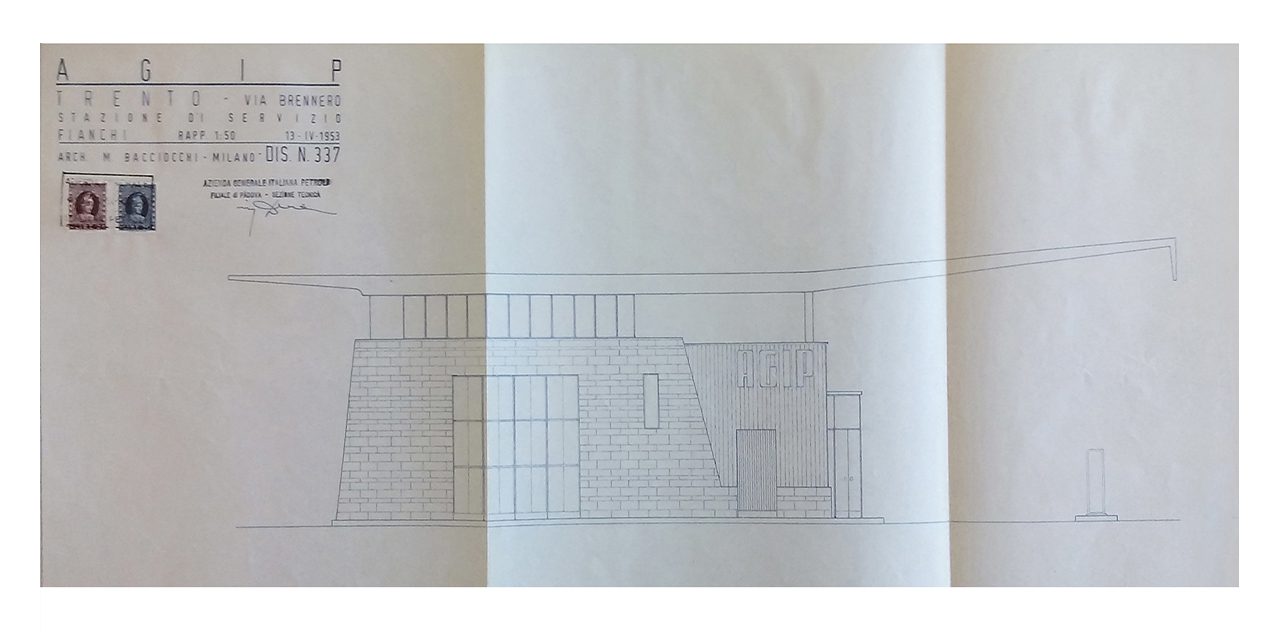
An act of representing the built heritage can also be an act of conservation, an attribution of value and a gesture of care based on the priority of historical and collective memory. This is the underlying reflection behind the unbuilt design research carried out on the petrol stations in the city of Trento: areas that are currently underutilised, often situated in locations where it is possible to revive their past life, study their present potential and outline new forms within the urban fabric.
The functional and visual reinterpretation of the network of motor fuel filling stations distributed across the territory provides the conceptual framework for developing innovative strategies of analysis and intervention grounded in the specific characteristics of the contemporary landscape. Within this perspective, the integration of architecture, graphic design, and visual communication constitutes the methodological framework through which processes of public-space reactivation are explored. Rather than supporting consumer-oriented dynamics, these adaptive and sustainable strategies promote new social, cultural, and recreational forms of use, fostering a renewed relationship between communities and the built environment.