
Identifying inclusive languages for the communication and enhancement of a landmark building in the skyline of modern Brescia contributes to fostering a more conscious interest in the city’s 20th-century architectural heritage, of which the Crystal Palace is a part. An in-depth analysis of archival materials and drawings by its designer, Bruno Fedrigolli (1921–1995), made it possible to compare different modes of representation and reconstruct the genesis of the project, from the first design proposals in 1988 to its completion in 1992.
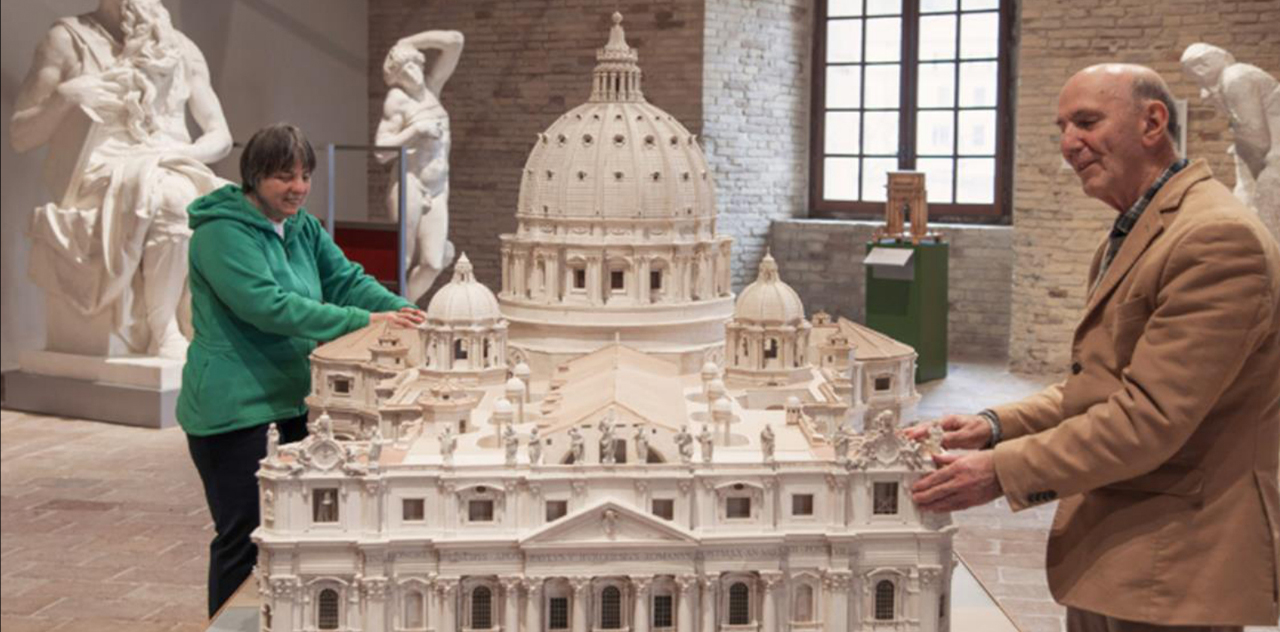
This reconstruction led to an inclusive communication strategy: translating the building’s constituent elements—a base and a glazed parallelepiped with horizontal and vertical coloured bands on its façades—into a three-dimensional tactile model poses the challenge of identifying scales, materials, and textures capable of conveying the complexity of the building through sensory experience.
The visual-tactile exploration of the 3D model, combined with contextual and detailed floor plans and informative data, will enhance everyone’s understanding of a symbol of the modern city