

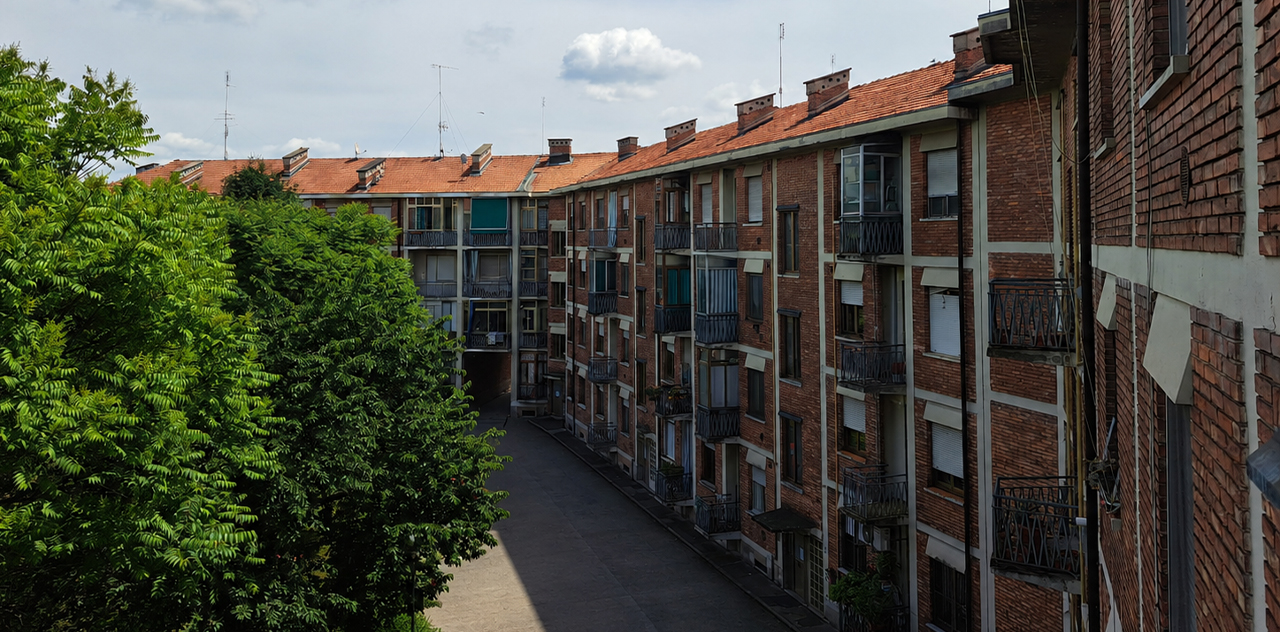
The contribution reconstructs the historical trajectory of public housing as an institutional infrastructure generated by the failure of the housing market and the processes of industrial urbanisation, highlighting its non-linear development and the co-production of welfare and urban form. Within this framework, the Santa Caterina village is examined as a case study to investigate, from a historical and social perspective, its testimonial value and the conditions for its potential protection. The methodology combines an analysis of legislative and administrative sources (Law 137/1952; Legislative Decree 42/2004), a morphological and typological reading of the settlement, and an interpretation of its management mechanisms. The results indicate that the “memory” of the neighbourhood is embedded not only in formal and material continuity, but also in the accumulation of micro-transformations capable of eroding its overall legibility. The study therefore examines criteria and indicators for managing transformation without erasure.