
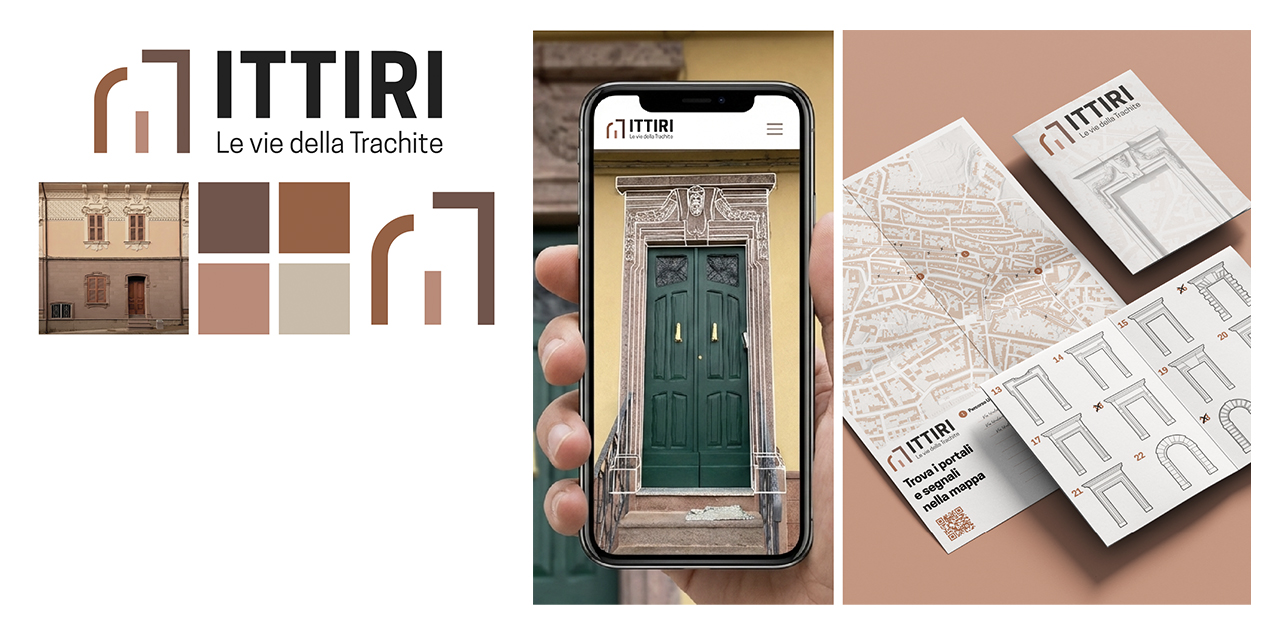
The article talks about a plan to show off the trachyte portals in the municipality of Ittiri, a town in northern Sardinia known for its use of trachyte, a stone that is easy to find in large amounts in the area. The plan includes mapping the architectural decorations and sharing them thru a low-impact interpretative system that uses QR codes to connect to digital spaces with historical and cultural information, along with an edutainment project that combines both analogue and digital elements.
The study suggests a reproducible model founded on four primary components: the establishment of a coherent knowledge framework; the methodical arrangement of scattered heritage; the creation of a unified visual identity; and the utilisation of digital instruments for improved interaction. This model is potentially transferable to other contexts, serving as a methodology applicable at different territorial scales.